By Pearl Chua, Jurong Christian Church
Attending the Crossings Conference in St. Louis this January was both a privilege and a deeply formative experience for me. Thanks to the generosity of Dr. Paul Tambyah, I was able to participate in the conference held from 11–14 January 2026 under the theme, “In Christ for Good: The Gospel and Christian Behavior.”
Initially, I felt somewhat apprehensive. As a seminary student still in training, I wondered whether my presence would truly be relevant among experienced pastors and preachers. However, Sally Kee, who extended the invitation, reassured me that the purpose of the conference was precisely to equip and form pastors and preachers in the craft of preaching. In that sense, she reminded me that being a student did not make me an outsider to the conversation, but someone very much in need of it.
Before attending the conference, I had often heard the phrase “law and gospel” associated with Lutheran preaching. Yet, to be honest, the concept remained rather abstract to me because I had rarely seen it demonstrated clearly in practice. I vaguely assumed that “law” referred primarily to the Old Testament, perhaps especially the Ten Commandments, while “gospel” referred mainly to the Gospels themselves. The conference helped me realise that the distinction runs much deeper than that.
One of the most illuminating aspects of the conference was learning about the Crossings method — a way of reading Scripture and understanding ourselves through the distinction between law and gospel. The method encouraged us to study the biblical text by first identifying its diagnosis of the human problem, then searching for the Good News sufficient to address that problem, and finally examining how the Gospel actually “crosses” and transforms the human condition.
As I listened to the presentations and workshops, I began to see how powerful this kind of preaching can be. Law and gospel preaching is not merely a theological formula or a sermon structure. Rather, it penetrates to the heart of the Christian faith: that we are sinners who live solely by the grace of God in Jesus Christ. The law exposes not only outward failures, but the deeper realities of misplaced trust, fear, and self-justification within us. The gospel, in turn, does not merely offer moral encouragement, but proclaims Christ himself as the one who forgives, restores, and gives life.
What struck me most was how this approach keeps Christian preaching centred on Christ rather than moralism. Especially given the conference theme, “In Christ for Good,” I came to appreciate more clearly that Christian behaviour flows not from guilt or self-improvement, but from being already united to Christ by grace. Good works are not a means of earning God’s favour; they are the fruit of the Gospel already at work in the believer.
While I recognise that one may not always employ the entire Crossings methodology explicitly in every sermon, I nevertheless found its overall movement immensely valuable for preaching preparation. At the very least, it provides a faithful rhythm for Lutheran proclamation: diagnosing the human condition honestly, proclaiming Christ’s saving work clearly, and bringing the hearer into the comfort and freedom of the Gospel.
Looking back, I am grateful not only for the opportunity to attend the conference, but also for the clarity it brought to my own understanding of preaching. It helped me see more deeply that faithful preaching is not simply about explaining a text or imparting moral lessons, but about bringing sinners into encounter with the crucified and risen Christ who alone gives life.
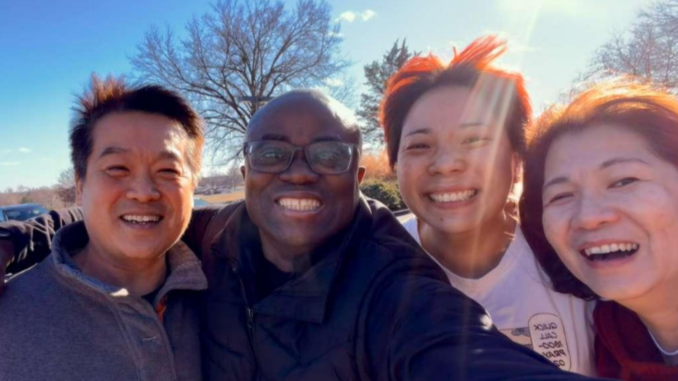
![Learning journey with Preacher Lee Kim (Yishun Christian Church [Lutheran]) and Willy (Lutheran Church of Our Redeemer). 学习同伴: 丽金传道 (义顺基督教堂) 与威利 (信义会救赎堂)](https://lutheran.org.sg/wp-content/uploads/2026/06/Screenshot-2026-06-22-211911-678x381.png)
蔡莲珠,裕廊基督教会(JCC)
今年一月,我有幸参加了在圣路易斯举行的 Crossings Conference。感谢 Dr. Paul Tambyah 的慷慨资助,让我得以在 2026 年 1 月 11 日至 14 日期间,参与这场以“在基督里为善:福音与基督徒行为”为主题的大会。
起初,我有些忐忑。作为一名仍在受训中的神学生,我不确定自己是否能在经验丰富的牧师与讲道者中间找到位置。但邀请我参加的 Sally Kee 让我安心:她说,这次大会的目的正是要装备和塑造讲道者。学生身份并不会让我成为局外人,反而正是需要这趟学习之旅的人。
参加大会之前,我常听到“律法与福音”这个与路德宗讲道相关的说法,但坦白说,这个概念对我来说仍很抽象。我以为“律法”主要指的是旧约,特别是十诫;而“福音”则主要指向四福音书。这次大会让我明白,这一区分远比我想象的更加深刻。
其中最具启发性的一点,是我接触到了 Crossings 方法——一种透过律法与福音的区分来阅读圣经、理解自我的方式。这一方法鼓励我们首先找出经文对人类问题的“诊断”,然后寻找足以应对该问题的“好消息”,最后探讨福音如何真正“穿越”并改变人的处境。
当我聆听讲座并参与工作坊时,我逐渐看到这种讲道的巨大力量。律法与福音的讲道不仅是一种神学公式或讲道结构,它直击基督教信仰的核心:我们是罪人,唯独靠着在耶稣基督里的恩典而活。律法不仅揭露外在的失败,更揭示我们内心错误的依靠、恐惧与自我称义。而福音不只是提供道德上的鼓励,更是宣告基督自己——那位赦免、恢复并赐下生命的主。
最让我感动的是,这种方法使讲道始终以基督为中心,而非沦为空泛的道德说教。特别是大会主题“在基督里为善”,让我更清楚地认识到:基督徒的行为并非出于内疚或自我提升,而是源于我们已经在恩典中与基督联合。善行不是赢得上帝恩宠的手段,而是福音在信徒生命中已经结出的果子。
当然,我明白并不是每一篇讲道都必须严格完整地使用 Crossings 方法。但至少,它为路德宗的宣讲提供了一个忠实的节奏:诚实地诊断人的处境,清晰地宣告基督的救恩,带领听者进入福音的安慰与自由。
回顾这段经历,我不仅感激有机会参加这次大会,更感恩它为我带来的讲道认知上的清晰。它让我更深刻地看见:忠实的讲道,不是解说经文或传授道德教训,而是带领罪人与那位被钉十字架并复活的基督相遇——唯有祂,赐下生命。